Posts

Showing posts with the label Change Management

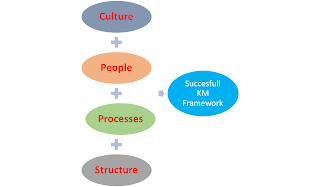
Setting up a successful Knowledge Management framework.
Image
  For a knowledge management (KM) framework to succeed, it needs to be closely aligned with the business goals and embedded in the organizational culture. The four different areas that need to be considered while designing an organizational KM framework are: Organizational Culture: To achieve long term success KM needs to be embedded in the organization culture and core values. The organization needs to establish work processes that encourage knowledge sharing, and free flow & exchange of ideas.  The organization needs to value continuous learning as well as effectively retain its knowledge and repurpose it to see meaningful impact of KM in the long run. People: People are the most important asset of any organization. For a KM framework to succeed in an organization, it is vital for people to embrace and use the KM tools. When recognized as an important strategic initiative by the top management, it is more likely to be easily embraced and adapted by employees. Proce...

Capturing Knowledge for Organizational Development

  The effective knowledge harvesting, utilization, and sharing are pivotal to competitive advantage for any organization. As Sir Francis Bacon quoted “knowledge is power”. The channeled knowledge through the Knowledge Management (KM) system helps bridge the skills gap, allowing people to make better decisions and provide efficient and productive results, ultimately leading to time and costs savings.     Knowledge can be broadly divided into two categories: explicit and tacit.   explicit knowledge can be easily codified and retained by the organization via manuals, documents, eLearning courses, etc. However, tacit or intangible knowledge that comes with people’s experiences and expertise can only be retained and channelized as explicit knowledge via the network of KM communities. This knowledge leads to better decisions and outcomes benefitting not only the people but the organization as a whole. Below given are some of the most effective knowledge management prac...